

Who This Blog Is For: Vertigo and balance problems in older adults are more than an inconvenience — they change how you move through your day. This blog is for people across Mt Dora, Eustis, Tavares, and the surrounding Lake County communities who have noticed dizziness, unsteadiness, or new caution on the stairs, and who want to understand a structural piece a standard workup can miss.
There was a time you didn’t think about balance at all. Lately it’s different. The room tilts when you stand up from the couch, the grocery aisle seems to sway, and you’ve started reaching for a cart, a railing, an arm. Maybe you’ve stepped back from things you love — the morning walk with your spouse, dancing at a grandchild’s wedding, lunch out with friends — because you’re not sure your body will cooperate. That narrowing is exhausting, and it’s easy to assume it’s simply the price of getting older. But when dizziness and unsteadiness don’t ease with time, it often means a part of the picture hasn’t been looked at yet.
Key Insights
- Balance problems and dizziness grow more common with age — but “just getting older” isn’t a full explanation.
- Everyday movements like standing up or rolling over in bed are the spark for an episode, not the cause.
- The alignment of the upper neck is a structural contributor that shapes how steadily your balance system works.
- Upper cervical care works alongside your physician’s care — never in place of it.
What Causes Vertigo and Balance Problems in Older Adults?
Quick Answer: Vertigo and balance problems in older adults rarely have a single source. Your physician looks first at what a standard workup assesses — BPPV, inner-ear conditions like Meniere’s or labyrinthitis, vestibular migraine, and cervicogenic dizziness from the neck. A commonly overlooked contributor is the upper cervical spine, whose alignment can influence how steadily the balance system works.
Vertigo is a symptom, not a diagnosis, so the reason it happens depends on what’s behind it. As we age, several causes become more common, and your physician evaluates them first: benign paroxysmal positional vertigo (BPPV), inner-ear conditions such as Meniere’s or labyrinthitis, vestibular migraine, and cervicogenic dizziness that stems from the neck. Blood-pressure changes and certain medications can play a role too.
Everyday movements are often the spark, not the source: standing up from a chair, turning your head to back out of the driveway, or rolling over in bed can set off a wave of dizziness. But these triggers don’t explain why the balance system became sensitive to begin with.
That deeper question points to the upper cervical spine. When the top vertebrae sit slightly out of alignment, the balance signals your body relies on can grow less consistent — a structural contributor that’s easy to miss when attention stays on the inner ear.
Why Do Balance Problems Become More Common With Age?
Balance is a team effort. Your inner ear, your eyes, and the position sensors in your joints and spine all feed the brain, which blends them into a steady sense of where you are. With age, each input can lose a little sharpness, so the system has less margin than it once did.
The upper neck plays a quiet part here. Those top vertebrae are dense with the position sensors your brain leans on for balance. When they hold a small misalignment — sometimes traced to an old fall, a car accident, or years of posture habits — nearby muscles compensate to keep your head level. Over time, that compensation keeps the area working harder than it should — and because balance leans on clear input from this region, many older adults find the effect adds up.
How Do Vertigo and Balance Problems Affect Daily Life and Relationships?
The toll of ongoing dizziness rarely stays in your body — it reshapes your days and, often, your closest relationships. When you’re not sure the floor will stay put, you start saying no: to the evening walk, the road trip, the dinner out, the dance floor. A spouse becomes a spotter, adult children call to check in, and you downplay a hard morning so no one worries.
None of that is weakness; it’s a reasonable response to a body that feels unpredictable. But the strain is real — on the partner who worries, the friends you see less often, the independence you’d rather keep. Steadier balance isn’t only about avoiding a fall — it’s about staying in the life you’ve built, with the people in it.
How Can Upper Cervical Care Support Steadier Balance?
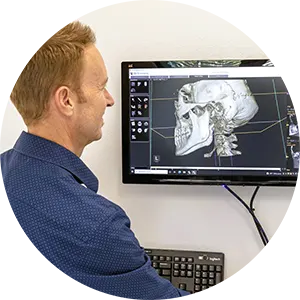
Upper cervical care focuses narrowly on the alignment at the top of the neck and how it relates to your posture and balance. At Mount Dora Family Chiropractic, the Blair method guides the process — an imaging-based, side-specific approach that maps your individual anatomy before any gentle, low-force correction is made. For older adults in particular, that gentleness matters: there’s no forceful twisting involved.
The aim isn’t to chase the dizziness itself but to support the structure so your balance system has cleaner, steadier input. Many people find that upper cervical care fits naturally alongside the medical care they already trust — vestibular therapy, repositioning maneuvers, medication reviews — adding to it rather than replacing any part of it.
Find Steadier Footing in Mt Dora
If dizziness and unsteadiness have narrowed your world, the most useful step is to stop chasing each episode and look at what feeds the pattern. A focused upper cervical evaluation checks whether your alignment is part of what’s keeping your balance system on edge — and addressing it sooner may keep those compensation patterns from quietly contributing to other issues down the road. At Mount Dora Family Chiropractic, Dr. Todd Gignac offers a gentle evaluation to see whether the upper-neck piece fits your situation.

Frequently Asked Questions
Is it normal to have vertigo and balance problems as you get older?
It’s common, though “normal” isn’t quite the right word. Aging can dull the inner ear, vision, and position sensors the brain uses for balance, so dizziness does become more frequent. But common isn’t the same as unexplained — when balance problems stay, it’s worth having both the medical and structural pieces evaluated rather than writing them off as age alone.
Can neck alignment affect balance in older adults?
It can contribute. The top vertebrae are rich in the position sensors your brain relies on for balance, so an unaddressed misalignment may be one factor in ongoing unsteadiness — alongside, not instead of, the medical causes your physician checks for.
What is the difference between BPPV and cervicogenic dizziness?
BPPV comes from loose crystals in the inner ear and is often set off by specific head positions. Cervicogenic dizziness relates to the neck and how it feeds balance and position information to the brain. They can feel similar, so a clinician’s evaluation helps tell them apart.
Can vertigo and balance problems affect my relationships and daily activities?
They often do. Many people quietly step back from walks, driving, travel, and social plans, and lean more on a spouse or family member. That’s an understandable response to feeling unsteady. Addressing the underlying pattern — not only the moments of dizziness — is often what helps people return to the activities and relationships they’ve been avoiding.
Does upper cervical care replace seeing my doctor about dizziness?
No. It’s meant to work alongside your physician’s care. Your doctor evaluates and manages conditions like BPPV, Meniere’s, and vestibular migraine; upper cervical care simply looks at a structural contributor that a standard workup can overlook.
Is upper cervical care safe for older adults?
The Blair approach uses gentle, low-force corrections guided by imaging rather than forceful twisting, which is part of why many older adults are comfortable with it. As with any care, an evaluation comes first to determine whether you are a good candidate before anything is done.
How would I know if my balance problems are connected to my neck?
Clues can include a past head or neck injury, lingering neck tension or stiffness, headaches that travel from the base of the skull, or dizziness that persists after inner-ear causes have been checked and managed. None of these confirms a neck link on its own, but together they are worth noticing. A focused upper cervical evaluation in Mt Dora, which looks at alignment and posture, is the clearest way to find out.
How long might it take to notice a difference?
It varies from person to person, depending on how long the pattern has been present and what else is involved. Some people notice changes within a few weeks, while others take longer. Your care plan is tailored to what your evaluation shows, and progress is reviewed along the way.
To schedule a consultation with Dr. Gignac, call our Mt Dora office at 352-461-1695. You can also click the button below.
 If you are outside of the local area, you can find an Upper Cervical Doctor near you at www.uppercervicalawareness.com.
About the Author