

Who the Blog is For:You’ve probably wondered: can poor posture cause migraines? For a lot of desk-bound people, the two travel together more than they realize — and by mid-afternoon, you feel it. This blog is for the people in Mt Dora, Eustis, Tavares, and the surrounding Lake County communities who are tired of pushing through the pounding and want a workday without reaching for the dark room and the medicine bottle.
You know the buildup by now — tightness across your shoulders, heavy eyes, the certainty another one is coming. So you power through the meeting, cancel the evening, and lie down in the dark while everyone else carries on. The hardest part isn’t only the pain; it’s planning your life around it — the work you fall behind on, the way you’ve started accepting migraines as the cost of the job. They aren’t. For a lot of people, part of what keeps the cycle going is hiding in plain sight: the way the head sits over the body all day long.
Key Insights
- Posture alone doesn’t cause migraines — but forward-head strain on the upper neck can be a real, overlooked contributor.
- Long hours at a screen load the joints and muscles your brain relies on for steady signaling.
- The spark — a long workday, a short night — isn’t the underlying pattern.
- The upper neck’s alignment is a structural contributor worth evaluating when migraines keep returning.
- Upper cervical care works alongside your physician’s care — never in place of it.
Can Poor Posture Really Trigger Migraines?
Quick Answer: Poor posture doesn’t cause migraine on its own — migraine is a neurological condition with many triggers your physician evaluates. But forward-head posture loads the upper neck, where joints and muscles feed signals to the brain. For some people that steady strain is a commonly overlooked contributor — a reason to check the upper cervical spine when migraines persist.
Migraine is a neurological condition, not simply “a bad headache,” and it has known triggers your doctor will want to evaluate — hormones, sleep, stress, certain foods, and more. Posture doesn’t replace any of that, but it can sit underneath as an aggravator.
When you hold your head forward over a screen for hours, the load your neck carries climbs sharply. The muscles at the base of the skull stay switched on, the top joints compress, and that region — dense with the position sensors your brain uses to orient you — works overtime. For people prone to migraine, that constant upper-neck tension can lower the threshold for an attack, or blur the line between a tension headache, a cervicogenic headache, and a migraine.
The everyday triggers — a long workday, a short night, a stressful week — are the spark. But forward-head loading is part of what keeps the fuse so short, and it’s easy to miss when attention stays on triggers and medication rather than the mechanical strain feeding the pattern.
That’s where a commonly overlooked contributor comes in: the alignment of the upper neck. When those top vertebrae sit slightly out of alignment — from desk work, an old injury, or posture habits — the strain concentrates and the signals reaching the brain grow less consistent. It’s a structural contributor easy to overlook when posture is written off as just “sitting up straight.”
What Happens If Posture-Related Migraines Go Unaddressed?
Left unaddressed, a posture-driven migraine pattern rarely stays put. Attacks can grow more frequent as the strain becomes your body’s new normal, and more lost mornings mean more catching up, more canceled plans, more pressure.
There’s a medication cost, too: leaning harder on pain relievers as attacks increase can, for some people, lead to rebound headaches — a cycle worth heading off with your doctor.
And there’s the quieter toll. When you’re bracing for the next migraine, you hold back — the project you don’t volunteer for, the dinner you leave early, the weekend you spend recovering instead of living. None of that is weakness. But it’s why getting to the root of the pattern, rather than only managing each attack, matters so much.
How Can Upper Cervical Care in Mt. Dora Help With Posture-Related Migraines?
If you’ve been white-knuckling through this on your own, wondering whether the posture-migraine link is even real — it is, and you have options. Upper cervical care focuses on the alignment at the very top of the neck, exactly where forward-head strain concentrates. At Mount Dora Family Chiropractic, the Blair approach is imaging-guided and precise — mapped to your anatomy, with gentle, low-force corrections and no forceful twisting.
Getting started is straightforward:
- A focused evaluation. The team reviews your history and how your posture and upper-neck alignment relate to your headaches.
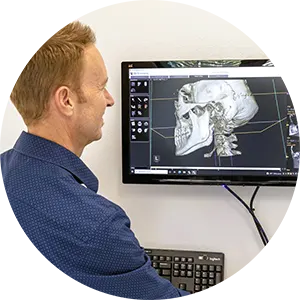
- Imaging-guided mapping. Precise images show your alignment, so any correction is specific to you, not guesswork.
- Gentle care, alongside your doctors. Corrections are low-force, and the care works with your medical team — never in place of it.
The goal isn’t to chase each migraine but to ease the structural strain so your body has a steadier foundation. Many people find upper cervical care fits naturally beside the care they already rely on — neurologist, medications, trigger management — adding to it rather than replacing any of it.
Find Relief From Posture-Driven Migraines in Mt Dora
Picture getting through a full workday without the three-o’clock dread — finishing the project, making the dinner, keeping the weekend you planned, without one eye on the next attack. The first step is simple: stop chasing each migraine and look at what might be feeding the whole pattern. A focused upper cervical evaluation checks whether forward-head strain and alignment are part of what’s keeping your migraines coming. At Mount Dora Family Chiropractic, Dr. Todd Gignac would be glad to sit down, hear your history, and see whether the upper-neck piece fits.

Frequently Asked Questions
Can bad posture really cause migraines?
Not by itself. Migraine is a neurological condition with many triggers your doctor evaluates. But forward-head posture can be a contributor for some people, because it loads the upper neck and keeps the muscles and joints there under steady strain — which can lower the threshold for an attack.
What is forward head posture, and why does it matter?
It’s the habit of carrying your head in front of your shoulders — common after hours at a screen or phone. The farther forward your head drifts, the more load your neck carries to hold it up, and the harder the upper-neck muscles and joints have to work.
What is the difference between a cervicogenic headache and a migraine?
A cervicogenic headache starts in the neck and refers pain into the head. A migraine is a neurological condition with its own features, like sensitivity to light and nausea. They can overlap and feel similar, so a clinician’s evaluation helps sort out what’s driving yours.
Will fixing my posture make my migraines go away?
No one can promise that, and anyone who does is overselling. Posture is only one possible contributor. What addressing posture and upper-neck alignment may do, for some people, is ease the mechanical strain that feeds the pattern — often alongside the medical care you already have. The honest goal is fewer and milder attacks over time, not a guarantee.
Is upper cervical care safe?
The approach uses gentle, low-force corrections guided by imaging rather than forceful twisting. As with any care, an evaluation comes first to see whether you’re a good candidate before anything is done.
How would I know if my migraines are connected to my neck?
Clues can include a desk-bound or screen-heavy routine, neck tension or stiffness that tracks with your headaches, pain that starts at the base of the skull, or a past head or neck injury. None confirms a neck link alone, but together they’re worth noticing. A focused upper cervical evaluation is the clearest way to find out.
How long might it take to notice a difference?
It varies, depending on how long the pattern has been present and what else is involved. Some people notice changes within a few weeks; others take longer. Your care plan is tailored to what your evaluation shows.
To schedule a consultation with Dr. Gignac, call our Mt Dora office at 352-461-1695. You can also click the button below.
 If you are outside of the local area, you can find an Upper Cervical Doctor near you at www.uppercervicalawareness.com.
About the Author